This page has information on the FAST CAT 101 seminar, what to take to a Fast CAT event, and FAST CAT 401: How to get the fastest times! We will add other features as we find them helpful.
Things to bring to a FAST CAT 101 Seminar
1. Wear comfortable clothes appropriate for the weather, and shoes with closed toes for safety.
2. Bring drinking water for you and your dog.
3. If it is hot, take extra water to cool your dog down by wetting his coat.
4. Bring 2 leashes, one for the releaser and one for the catcher.
5. Bring a slip lead or kennel lead if that is what you use to release your dog. If you don't have one, don't worry. We will discuss the different types during the seminar.
6. Your dog should wear a flat collar without tags, or you can tape the tags against the collar, if you prefer to run your dog with a collar on. I run mine naked.
7. Bring bags to pick up and dispose of dog waste.
8. Bring treats, or a special toy to help you catch your dog.
9. Bring a crate to contain your dog while we are talking and between runs, either in your vehicle or in a sheltered spot. You can’t always have them with you. We will have some shade available.
10. Bring a copy of your dog’s rabies vaccine certificate. (I keep a picture of each dogs’ rabies certificate and AKC registration on my phone.)
We will provide hand outs, EMT scissors for you to keep, a lot of great information, and a bunch of fun!
Things to take to a FAST CAT Trial
1. Wear comfortable clothes appropriate for the weather, and shoes with a closed toe for safety.
2. Drinking water for you and your dog.
3. If it is hot, take extra water to cool your dog down by wetting his coat.
4. 2 leashes, one for the releaser and one for the catcher.
5. A slip lead or kennel lead if that is what you use to release your dog.
6. A flat collar without tags, or tape to secure the tags against the collar, if you prefer to run your dog with a collar on. I run mine naked.
7. Bags to pick up and dispose of dog waste.
8. Treats, or a special toy to help you catch your dog.
9. A pop-up or shade cloth such as Aluminet to provide shade for you and your dog
10. A crate to contain your dog between runs either in your vehicle or in a sheltered spot. You can’t always have them with you.
11. Bandage or EMT scissors or sharp knife to cut the line in an emergency.
12. Your dog’s registration information if you are doing day-of entries.
13. A copy of your dog’s rabies vaccine certificate. (I keep a picture of each dogs’ rabies certificate and AKC registration on my phone.)
14. You may also want to bring a small first aid kit for you and your dog.
FAST CAT 101 Agenda
1. Introductions
2. Getting your dog interested in the lure
3. Safety
4. Dog control techniques and slip leads
5. How to find trials and enter
6. What to expect at the trial
7. The machine and equipment used at the trial
8. Inspecting the dogs
9. Practice for your dog, catered just for your dog
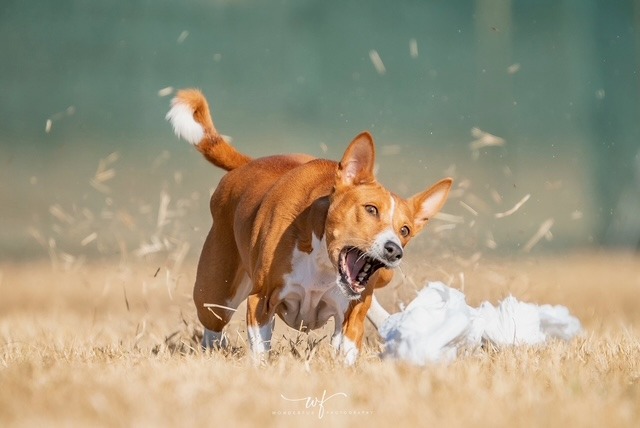
FAST CAT 401: How to get the fastest times
Make sure your dog is in good shape. Couch potatoes and weekend warriors are more prone to injuries, and won't reach their fastest speeds. Conditioning can include running free with other dogs, jogging or cycling with you, chasing a ball or frisbee, swimming and fast cat practices.
Practice your release technique. Your dog should have all 4 feet underneath them and on the ground. They should be facing the lure and focused on it, with their 2 front feet just inside the back edge of the start box. This allows the dog to be running well before it passes the starting gate timer.
Watch other dogs run before yours to see how the lure operator is running the lure. They have a lot to do with your dog's time. It they start too far ahead and you know your dog will lose interest, politely request the huntmaster to bring the lure closer to your dog. This is especially important if you have a small dog. Lay down so your eyes are 10" off the ground, and see how far ahead you can find the lure. If your dog runs fastest to catch the lure when it far out in front of the dog, especially if your dog is very fast, ask the huntmaster to tell the lure operator to run it fast. If your dog loses interest if the lure gets too far ahead, also ask the huntmaster to tell the lure operator to keep it close to the dog.
Do not feed your dog a big meal the morning of the event. A small easily digested snack is fine for most dog as long as they have a couple hours to digest it. Some dogs are better off with no food.
Make sure your dog is hydrated before you get to the event. A belly full of water sloshing around can be uncomfortable and even dangerous if your dog is a breed that is prone to bloat. Give them multiple small drinks after their run and walk them away from the lure until their breathing settles to almost normal.
If it is very hot, you can wet your dog's coat so that they will be cooler when they run. You can keep a "cool-down" blanket on them until they enter the start box.
If your dog is crazy excited when it is around the lure, keep them away where they cannot hear or see the lure until there are only one or two dogs before yours. Then bring them to the track.
If it is hot, or you have a coated breed, you can keep them in the shade produced by your shadow while in line at the start.
If a stranger is releasing your dog, make sure they are familiar with your equipment, and your dog has a chance to get to know them. It will be less stressful for everyone.
Always praise and reward your dog at the end of their run before you leave the catch area. Immediately dragging your dog away from the lure and out gives your dog a mixed message. They may think you are correcting them for chasing the lure.
If you use a slip lead, make sure it has a wide collar that spreads out the pressure on your dog's throat. This prevents apoxia and coughing.
Have fun! Make sure your dog has fun! Talk to the people around you and develop a community and more friends. Dog people are the best.